Showing posts with label april fools. Show all posts

Sunday, April 1, 2018

The VQ of Plant Intelligence

April 1, 2018

“Plant Intelligence” has been greatly debate by plant biologists and philosophers alike [1–9]. Yet throughout this debate, no measure of plant intelligence has been proposed.

Indeed, if plant intelligence exists, it must be quantifiable similar to human intelligence [10].

Towards this end, the Daily Plant introduces the VQ, the "Vegetal Quotient", which will be the plant equivalent of IQ.

We assume that some plants will have a high VQ, akin to genius plants, while others will be vegetally challenged, and have a relatively low VQ.

To make the VQ statistically valid, we need your help. Please fill in the VQ form below. Just as Binet’s original test has been modified over the past century [10], we realize that this test is only a beginning. However with your help we can make the VQ as valid a description of plant intelligence as IQ is of human intelligence.

If the form below does not work, click here.

Much thanks for your help!

Bibliography
(1) Alpi, A., Amrhein, N., Bertl, A., Blatt, M.R., Blumwald, E., Cervone, F., Dainty, J., De Michelis, M.I., Epstein, E., Galston, A.W., Goldsmith, M.H.M., Hawes, C., Hell, R., Hetherington, A., Hofte, H., Juergens, G., Leaver, C.J., Moroni, A., Murphy, A., Oparka, K., Perata, P., Quader, H., Rausch, T., Ritzenthaler, C., Rivetta, A., Robinson, D.G., Sanders, D., Scheres, B., Schumacher, K., Sentenac, H., Slayman, C.L., Soave, C., Somerville, C., Taiz, L., Thiel, G. and Wagner, R. 2007. Plant neurobiology: no brain, no gain? Trends in Plant Science 12, pp. 135–136.
(2) Brenner, E.D., Stahlberg, R., Mancuso, S., Vivanco, J., Baluska, F. and Van Volkenburgh, E. 2006. Plant neurobiology: an integrated view of plant signaling. Trends in Plant Science 11(8), pp. 413–419.
(3) Calvo, P. and Baluška, F. 2015. Conditions for minimal intelligence across eukaryota: a cognitive science perspective. Frontiers in psychology 6, p. 1329.
(4) Van Loon, L.C. 2016. The intelligent behavior of plants. Trends in Plant Science 21(4), pp. 286–294.
(5) Marder, M. 2013. Plant intelligence and attention. Plant signaling & behavior.
(6) Marder, M. 2012. Plant intentionality and the phenomenological framework of plant intelligence. Plant Signaling & Behavior 7(11), pp. 1365–1372.
(7) Trewavas, A. 2016. Intelligence, cognition, and language of green plants. Frontiers in psychology 7, p. 588.
(8) Trewavas, A. 2017. The foundations of plant intelligence. Interface focus 7(3), p. 20160098.

(9) Trewavas, A.J. 2012. Plants are intelligent too. EMBO Reports 13(9), pp. 772–3; author reply 773.
(10) Binet, A., Simon, T. and Town, C.H. 1912. A method of measuring the development of the intelligence of young children. Lincoln, Ill.,: Courier.

 

Tuesday, April 1, 2014

Intelligent Plants for Intelligent Gardens

First there were courses for maximizing your child's IQ. Then came workshops for utilizing emotional intelligence. Now the latest fad sweeping New York and California is Intelligent Gardens - Gardens with a high VQ.

"People are no longer satisfied with a standard run of the mill  garden with dull plants. My customers demand that ionly the most intelligent plants populate their gardens" said Al Binet, the founder of IP - Intelligent Plants, Inc.

"We've developed a new scale called the Vegetal Quotient, or VQ for short, which measures the intelligence of individual plants on a scale of 50 - 150. A plant with a VQ of 150 would be considered highly intelligent (and thus highly sought after by our customers) while a plant with a VQ of 50 would not be found in a an advanced garden."

The VQ considers a number of independent parameters such as the time needed for a plant to differentiate
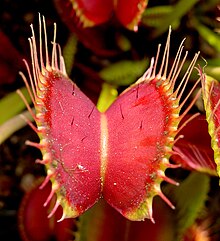
Dionaea muscipula, has a high VQ due
to its ability to count, remember, and move.
between wave lengths of light, its sensitivity to tactile stimulation, and its ability to communicate with its neighbors. A highly intelligent plant would also have the ability to communicate not only with neighboring plants, but with other species as well, such as insects.

"I've invested hundred's of thousands of dollars in classes for my children to make sure that they test high in academic, social and emotional intelligence. " says Raymond Cattell, "So of course I would want the surrounded only by the most intelligent plants. Mediocre and dim-witted plants have no place in my garden."


Monday, April 1, 2013

No sibling rivalry for Petunias

NOTE: THIS WAS ORIGINALLY PUBLISHED ON APRIL 1, 2013!

Petunias grown in a nursery together with their sibling petunias thrived much better post-separation than did a single petunia grown on its own. This conclusion jives with numerous studies which show that puppies kept with their litter-mates for at least 8 weeks develop better than puppies separated from their siblings soon after birth, and also fits with accumulating evidence showing the importance to human development of keeping a baby in physical contact with people, rather than isolating a baby in a crib.

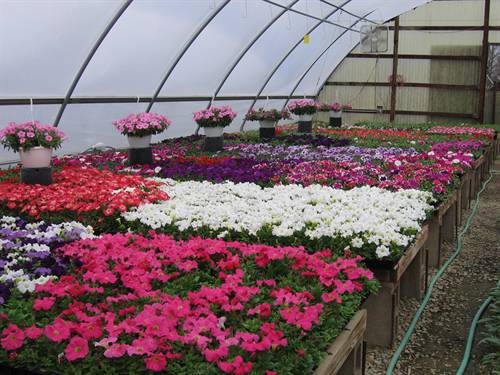
Seeds of Petunia hybrida were germinated in two different environments. In the green house termed “Petunia Patch”, the seeds were sown 5 cm from each other.
Petunias in the "Petunia Patch"

In the second green house termed “Onion Patch”, individual petunias were planted at least 50 m from each other. 5, 10, 20 and 45 days post-germination, individual plants from the Petunia Patch were transplanted to the Onion Patch. Control plants remained in each plot from germination until the end of the experiment. Each plot received the same watering and fertilizer regimen. Growth parameters (germination rate, height, leaf number, flowering time, flower diameter, seed set) were gathered daily over a two-month period.

The results were astounding. The longer the petunia stayed in the Petunia Patch, the more the individual plants thrived (see graph on left). The effect was especially significant for the first 10 days. Most of the petunias germinated in the Onion Patch, or transplanted early in life, failed to thrive. When asked to comment on the flowers that didn’t bloom, Drs. John N.Kamano, William E. Faber and Maurice Merl  said, “They were just lonely little petunias in an onion patch”.

These results have implications for home gardeners who are asked to purchase neighboring petunias in their local nursery so as to lessen the separation stress of plants upon leaving the nursery.

Sunday, April 1, 2012

Screaming plants mean no more fairways?

NOTE: THIS WAS ORIGINALLY PUBLISHED ON APRIL 1, 2012!

Scientists have discovered that grass blades scream when cut with a lawnmower.

Well scream may be a bit of an exaggeration, at least by human standards. While human ears can only hear sounds up to about 16,000 Hz, scientists have now measured vocalizations of 85,326 Hz emanating from grass blades cut by a power lawn mower. Admittedly, these sounds are at very low levels, 3.1415 x 10⁻⁹ decibels, which is probably why they had not been detected earlier.

The first reports of plant communication began to surface close to 40 years ago (see New York Times editorial, "When Trees Talk"), but until now, phyto-communication was limited to volatile chemical and the sense of smell.

Cross-section through a grass leaf. The dermal cells are found
on the top and bottom, the phloem in the bottom part of the
vascular bundles, the xylem in the upper part of the vascular
bundles, and the paranchymal tissues fill in most of the space
between the upper and lower epidermis.  
Now, using a highly advanced nano-level sound detector, scientists at Whoville University recorded the screams coming from the grass immediately as the lawnmower's blades cut specifically through the phloem and dermal cells of the leaf, but not when the xylem or paranchymal cells were disrupted. Prof. Horton, who headed the research program, hypothesizes that these "screams" imply that humans have inflicted immeasurable suffering on grass, and likely also other plant species. This has led him to form a new NGO called Scientists for the Ethical Treatment of Grass, which is working for a ban of all lawn mowers. When asked how this would affect his golf game, Prof. Horton replied that in any event, he usually plays out of the rough.

Example of experimental setup. The nano-level sound detector
was embedded within the blades to allow simultaneous
detection of any noise emission as the blades were cut.  
Horton's current research is in developing a smaller version of his sound detector which can be embedded within a tooth cap so as to record any similar screams from fresh vegetables as they are macerated in the mouth.

In all fairness it should be noted that these results have been contested by Prof. Wickersham from Nool University. Wickersham and his colleague Kang Aroo claim that such faint vocalizations are theoretically impossible, and that the work from Who U. is just a figment of the researchers' imaginations. When asked for a comment, Prof. Horton said, "A sound is a sound no matter how small".


For more information on plant communication, be sure to get your copy of WHAT A PLANT KNOWS.